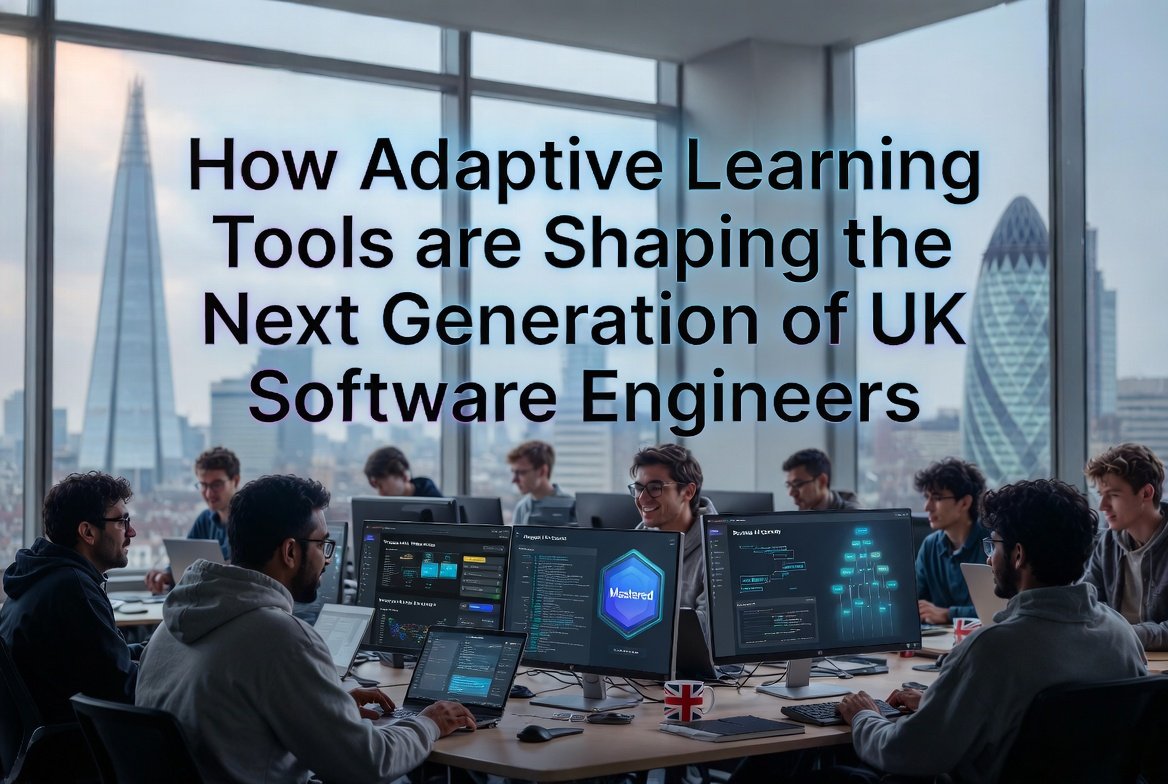
The landscape of software engineering in the United Kingdom is undergoing a massive transformation. Gone are the days when learning to code meant sitting in a cold lecture hall, scribbling notes from a static whiteboard. Today, the rise of adaptive learning technology is redefining how students across London, Manchester, and Birmingham master the complexities of the digital world. These tools do not just present information; they respond to the individual, creating a bespoke educational journey that mirrors the fast-paced nature of the tech industry.
For a student pursuing a degree in computer science, the sheer volume of information can be overwhelming. From understanding low-level hardware interactions to mastering high-level cloud architecture, the curriculum is dense. This is where adaptive systems step in. By analyzing a learner’s strengths and weaknesses in real-time, these platforms adjust the difficulty of tasks, ensuring that a student is neither bored by simplicity nor paralyzed by complexity.
The Evolution of Technical Pedagogy in Britain
British universities have long been hubs of innovation, but the traditional “one size fits all” approach to teaching code often left many students behind. Adaptive learning tools change this dynamic by focusing on mastery rather than just completion. When a student struggles with a specific logic gate or a memory management concept, the system provides targeted exercises to bridge that gap before moving forward.
This personalized approach is vital because software engineering is cumulative. You cannot build a secure web application if you do not understand the fundamentals of data structures. By using these intelligent systems, students build a more robust foundation. They spend less time on what they already know and more time tackling the areas that challenge them. This efficiency is exactly what the UK tech sector needs as it looks to fill thousands of high-skilled roles.
Bridging the Gap Between Theory and Practice
One of the greatest hurdles for any aspiring developer is the leap from theoretical knowledge to practical application. It is one thing to read about an algorithm; it is quite another to implement it within a complex system. Modern educational platforms now integrate real-world environments where students can experiment. These sandboxes offer immediate feedback, which is a hallmark of adaptive learning.
While these tools are powerful, the academic pressure remains high. Many students find that while they understand the concepts, the documentation and reporting required for university modules can be taxing. In such cases, many turn to professional resources to get help with assignments online, ensuring their practical work meets the rigorous standards of UK higher education. This balance of automated learning and expert human oversight creates a well-rounded educational experience.
The Role of Artificial Intelligence in Skill Acquisition
Artificial intelligence is not just something students study; it is the engine behind the tools they use to learn. AI-driven platforms can predict where a student might struggle based on data from thousands of previous learners. If the data shows that 70% of students fail a specific module on multithreading, the system can proactively introduce preparatory material to soften the learning curve.
For UK software engineers, this means a more streamlined path to seniority. By the time they graduate, they have a portfolio built on a series of successfully conquered challenges, each one tailored to their specific pace of learning. This creates a generation of developers who are not just “code monkeys” but problem solvers who understand the “why” behind the “how.”
Mastering Complex System Design
As students progress, they move into the realm of system architecture. This is perhaps the most difficult stage of a software engineering education. Understanding how different components of a computer system communicate requires a deep dive into the physical and logical layers of technology. Mastering this area is non-negotiable for anyone wanting to work in high-performance computing or embedded systems.
Navigating these complex topics often requires specialized support. Students frequently require computer architecture assignment help with Myassignmenthelp to ensure they grasp the intricacies of CPU cycles, instruction sets, and memory hierarchy. Having this level of expert guidance alongside adaptive tools allows students to tackle the most demanding parts of the syllabus with confidence.
Why the UK Tech Sector Favors Adaptive Learners
Employers in the UK, from fintech giants in the City of London to gaming startups in Dundee, are looking for adaptability. The tech world changes every six months; a framework that is popular today might be obsolete by next year. Because adaptive learning tools teach students how to learn—not just what to code—they produce graduates who are incredibly resilient.
These engineers are used to a feedback-heavy environment. They are comfortable with the idea that their first attempt might not be perfect and that the “system” (whether it is an educational tool or a CI/CD pipeline) will help them improve. This mindset is the “secret sauce” of a successful modern career in technology.
The Future of Digital Literacy in Higher Education
Looking ahead, we can expect adaptive learning to become even more integrated into the British university experience. We might see “living textbooks” that update themselves based on industry trends or VR environments that simulate a high-pressure DevOps crisis. The goal is to make the transition from the classroom to the office as seamless as possible.
The next generation of UK software engineers will be the most technically proficient yet. They are being forged in an environment that respects their individuality and challenges them at the exact level they need. By combining these innovative tools with the right academic support, the UK is well-positioned to remain a global leader in technological innovation.