Mark directory flpcrestation offers a smart, structured approach to taming the chaos of modern digital workspaces. In an age where professionals juggle thousands of files across projects, teams, and devices, this method stands out as a practical solution that turns cluttered folders into clean, logical systems anyone can navigate instantly.
What Mark Directory Flpcrestation Actually Means
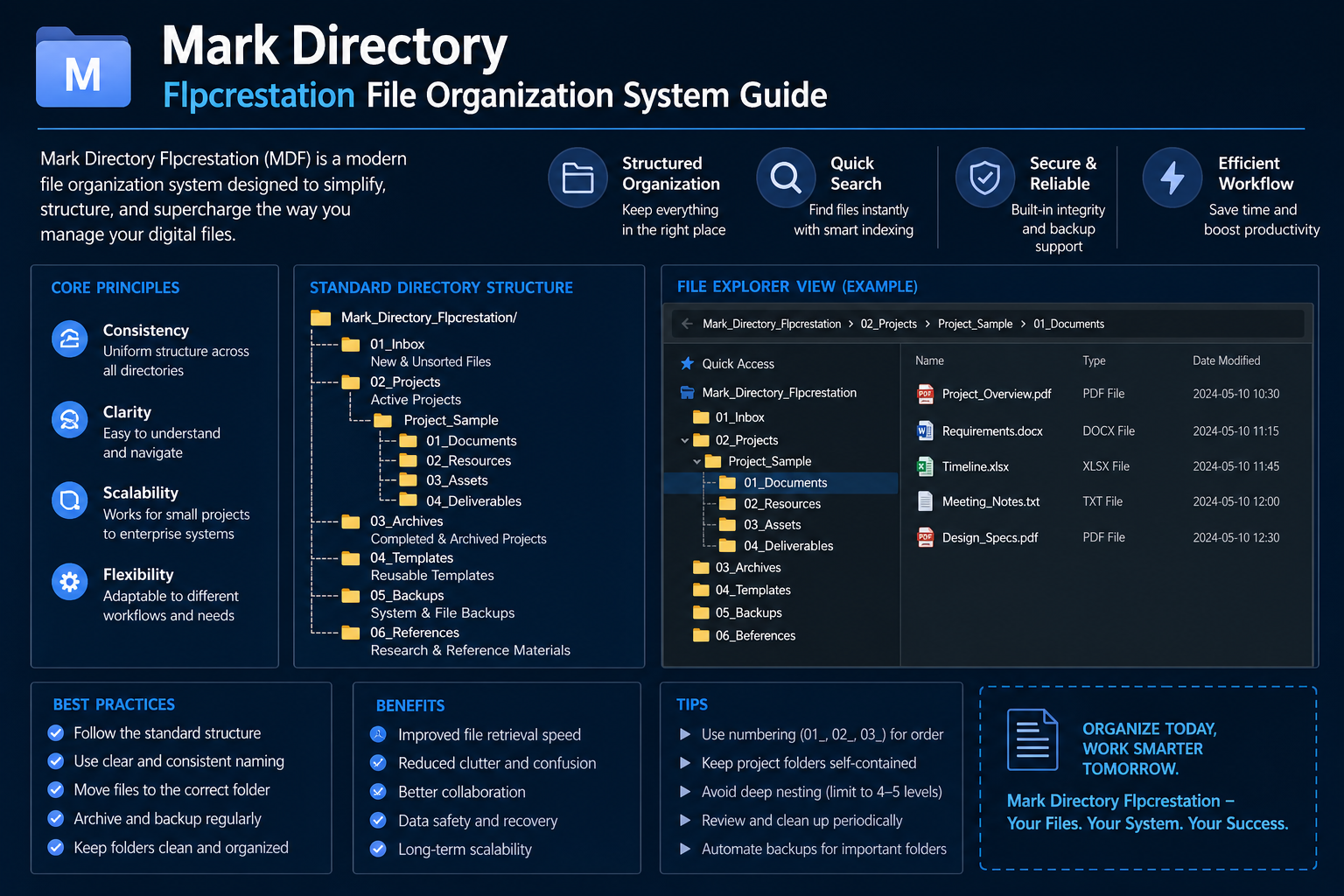
At its core, mark directory flpcrestation is a systematic way to label and organize directories so every folder has a clear purpose, status, and role in your workflow. Instead of generic names like “New Folder” or random date stamps, you apply consistent markers that tell both humans and software exactly what each directory contains and how it should be handled. These markers can include prefix codes, metadata tags, hierarchy rules, or status indicators that automate sorting, backups, and access control.
The beauty lies in its flexibility. Whether you run a small freelance operation or manage enterprise-level data pipelines, mark directory flpcrestation scales without forcing you into rigid templates. It draws from proven practices in software development and content management but makes them accessible for everyday PC users who simply want their files to make sense.
Why Proper Directory Marking Changes Everything
Digital clutter costs time and money. Studies on workplace productivity show employees spend up to two hours daily just searching for misplaced files. Mark directory flpcrestation eliminates that waste by creating predictable patterns. Once you mark a directory as “incoming,” “processing,” or “archive,” your brain and your tools instantly know where everything belongs.
Teams benefit enormously too. When everyone follows the same mark directory flpcrestation standards, collaboration becomes seamless. A designer drops assets into the correct folder, and the developer already knows the structure without asking. No more version-control nightmares or duplicate files scattered across drives.
How to Set Up Mark Directory Flpcrestation on Your PC
Getting started with mark directory flpcrestation takes less than an hour but delivers results that last years. Begin by auditing your current folders. Identify the main categories your work falls into — client projects, personal archives, media assets, or system logs. Create a master template folder that you can copy for every new project.
Next, apply clear naming conventions. Use prefixes like “IN_” for incoming files, “PROC_” for active processing, “FINAL_” for completed deliverables, and “ARCH_” for long-term storage. Add date stamps only where necessary, and always keep them secondary to the functional marker. For example, “PROC_Q2_Campaign” instantly tells you the status and content without opening the folder.
On Windows, right-click properties let you add custom tags that integrate with search tools. Mac users can leverage Finder tags or Smart Folders to mirror the same logic. Linux enthusiasts often script these markers with simple bash commands that automate the entire process. The key is consistency — once mark directory flpcrestation becomes habit, your file system feels alive and responsive rather than overwhelming.
Advanced Features That Take Mark Directory Flpcrestation Further
Power users elevate mark directory flpcrestation by layering automation on top of the basic structure. Tools like file watchers can automatically move items between marked directories based on rules you set. Completed reports shift from “PROC_” to “FINAL_” the moment they receive final approval stamps. Cloud sync services recognize your markers and apply different backup frequencies — daily for active folders, weekly for archives.
Metadata plays a huge role here. Embed keywords, project codes, or client IDs directly into folder properties so advanced search functions surface exactly what you need. Some professionals even create a central “dashboard” folder that contains shortcuts to every marked directory across multiple drives. This single view gives instant oversight without digging through nested layers.
For creative teams, mark directory flpcrestation shines in asset management. Photographers mark raw files separately from edited versions. Video editors separate footage, audio tracks, and final renders. Each directory carries its own lifecycle rules, preventing accidental overwrites and making handoffs between team members effortless.
Mark Directory Flpcrestation in Business and Team Environments
Businesses that adopt mark directory flpcrestation report dramatic improvements in operational speed. Marketing agencies use it to keep campaign assets organized across dozens of clients. Accounting firms mark directories by fiscal year and compliance status, making audits straightforward. Even small e-commerce operations benefit by separating product images, supplier contracts, and customer data into clearly marked zones.
The method also supports remote and hybrid teams perfectly. When everyone follows mark directory flpcrestation protocols, shared drives stay clean no matter who adds files. Version history becomes reliable because the structure itself prevents overlap. New hires ramp up faster because the folder logic acts as built-in documentation.
Security gains another boost. Sensitive directories receive restricted markers that limit access through group policies or cloud permissions. You can mark certain folders as read-only for junior staff while giving full control to managers. This granular approach reduces data breaches without adding complicated software layers.
Common Pitfalls and How to Avoid Them
Even the best systems have learning curves. The biggest mistake newcomers make with mark directory flpcrestation is overcomplicating the markers. Keep labels short, intuitive, and limited to five or six core categories at first. Over time you can expand, but starting simple prevents confusion.
Another trap is neglecting maintenance. Set a recurring calendar reminder every quarter to review and prune outdated directories. Archive anything older than your retention policy, and delete true junk. This quick habit keeps mark directory flpcrestation running smoothly instead of letting it slowly degrade into the very clutter it was meant to fix.
Consistency across devices matters too. Sync your master template to every computer and cloud account you use. When you create a new project folder on your laptop, it should match the exact structure on your desktop or shared drive. Small differences compound quickly and undermine the entire system.
Real-World Results Users Experience
After implementing mark directory flpcrestation, most people notice immediate relief. File searches that once took minutes now happen in seconds. Team meetings spend less time on “where is that file” questions and more time on actual work. Backup sizes shrink because only active directories receive frequent syncs, saving both storage costs and bandwidth.
Creative professionals particularly love how mark directory flpcrestation frees mental energy. Instead of worrying about organization, they focus on ideas. Developers debug faster because test data lives in predictable locations. Even hobbyists organizing family photos or music collections report the same satisfaction — everything just feels under control.
Long-term users often expand mark directory flpcrestation into full ecosystem management. They combine it with note-taking apps, project boards, and automation scripts that trigger notifications when directories reach capacity or require review. The method stops being a simple folder trick and becomes the backbone of their entire digital life.
Scaling Mark Directory Flpcrestation as Your Needs Grow
As projects multiply, mark directory flpcrestation adapts naturally. Start with local drives, then mirror the structure in cloud storage for seamless hybrid access. Enterprise teams layer database indexes on top of the folder markers so reporting tools pull data directly from the right directories without manual exports.
Mobile integration works surprisingly well. Many users create companion apps or shortcuts that let them check marked directory status from their phones. A quick glance shows which projects sit in “PROC_” status and need immediate attention, keeping workflows moving even when away from the desk.
The technique also pairs beautifully with artificial intelligence tools. Modern AI file managers recognize mark directory flpcrestation patterns and suggest intelligent moves or auto-categorizations. This synergy turns a manual habit into a semi-automated powerhouse without losing the human oversight that keeps everything accurate.
Future-Proofing Your Digital Workspace with Mark Directory Flpcrestation
Technology changes fast, but solid directory organization principles endure. Mark directory flpcrestation future-proofs your setup because it relies on logic rather than specific software. Whether you switch operating systems, adopt new cloud providers, or integrate emerging AI assistants, your marked structure travels with you intact.
Regularly revisit your core markers every six months. Ask whether they still reflect how you actually work. Small tweaks keep the system fresh without requiring a full overhaul. This evolutionary approach ensures mark directory flpcrestation grows alongside your career or business instead of becoming outdated.
Communities of power users share template packs and automation scripts online, though the real value always comes from customizing everything to your unique workflow. What works for a graphic designer may need adjustment for a data analyst, and that personalization is where mark directory flpcrestation truly shines.
Final Thoughts on Embracing Mark Directory Flpcrestation
Mark directory flpcrestation delivers the kind of quiet transformation that compounds over months and years. It removes friction from daily tasks, reduces stress around file management, and creates a foundation for genuinely productive work. Once you experience a workspace where every directory has purpose and every file has its place, going back to chaos feels unthinkable.
Start small today. Pick one project or one drive and apply mark directory flpcrestation principles fully. Watch how quickly the benefits appear. Before long you will wonder how you ever managed without this structured approach. Your future self — and your team — will thank you every single time they locate a file in seconds instead of minutes.
The digital world will only grow more complex. Tools and platforms come and go, but the need for clear, logical organization remains constant. Mark directory flpcrestation gives you a timeless framework that works now and will keep working no matter what technology brings next. Take control of your directories, mark them with intention, and enjoy the clarity that follows.