Have you ever paused on a quiet Italian street and noticed small grated openings at ground level that seem to breathe with the building? That’s where bocche lupo begins to reveal itself.
The phrase, literally “wolf mouths,” carries layers of history, danger, protection, and everyday ingenuity that have shaped Italian life for centuries. Far more than a simple description, bocche lupo connects military strategy, architectural necessity, culinary delight, and even the way Italians wish each other luck.
This deep dive explores every facet with practical insights you can use on your next trip or in your own appreciation of design and tradition.
The Linguistic Roots and Cultural Weight of Bocche Lupo
At its core, bocche lupo draws straight from the Italian words for mouths and wolf. Wolves have long symbolized raw power and survival in Italian folklore, from the she-wolf who nurtured Romulus and Remus to the cunning predators of mountain legends.
The plural form bocche lupo paints a vivid picture of multiple jaws ready to snap shut or open wide. Over time the expression moved beyond literal imagery into something far more versatile. It became a shorthand for any opening that feels both inviting and slightly menacing, a threshold where safety meets risk.
Understanding bocche lupo this way unlocks why the term appears across such different fields without losing its bite. It reminds us that language often borrows from nature to describe human inventions, turning fear into function and mystery into meaning.
Bocche Lupo in Military Engineering and Defensive Strategy
Long before bocche lupo appeared in city streets, the concept served a deadly purpose on battlefields. Ancient and medieval engineers dug conical pits, sharpened stakes at the bottom, and camouflaged them with branches or leaves.
Any attacker who stepped forward would tumble in, the “mouth” closing around them in an instant. These wolf-mouth traps turned open ground into a hidden weapon, slowing enemy advances and buying time for defenders. Soldiers learned to spot subtle changes in terrain because one misstep meant disaster.
The design was brutally efficient: narrow at the top to hide the depth, wide enough inside to prevent escape. Generations of military minds refined bocche lupo placements along walls, bridges, and forest paths. Even today, historians studying old fortifications point out how these simple pits influenced later trench warfare and obstacle planning.
The lesson remains clear — bocche lupo taught that the best defense often hides in plain sight, using the land itself as an ally.
Architectural Bocche Lupo: Ventilation, Light, and Urban Elegance
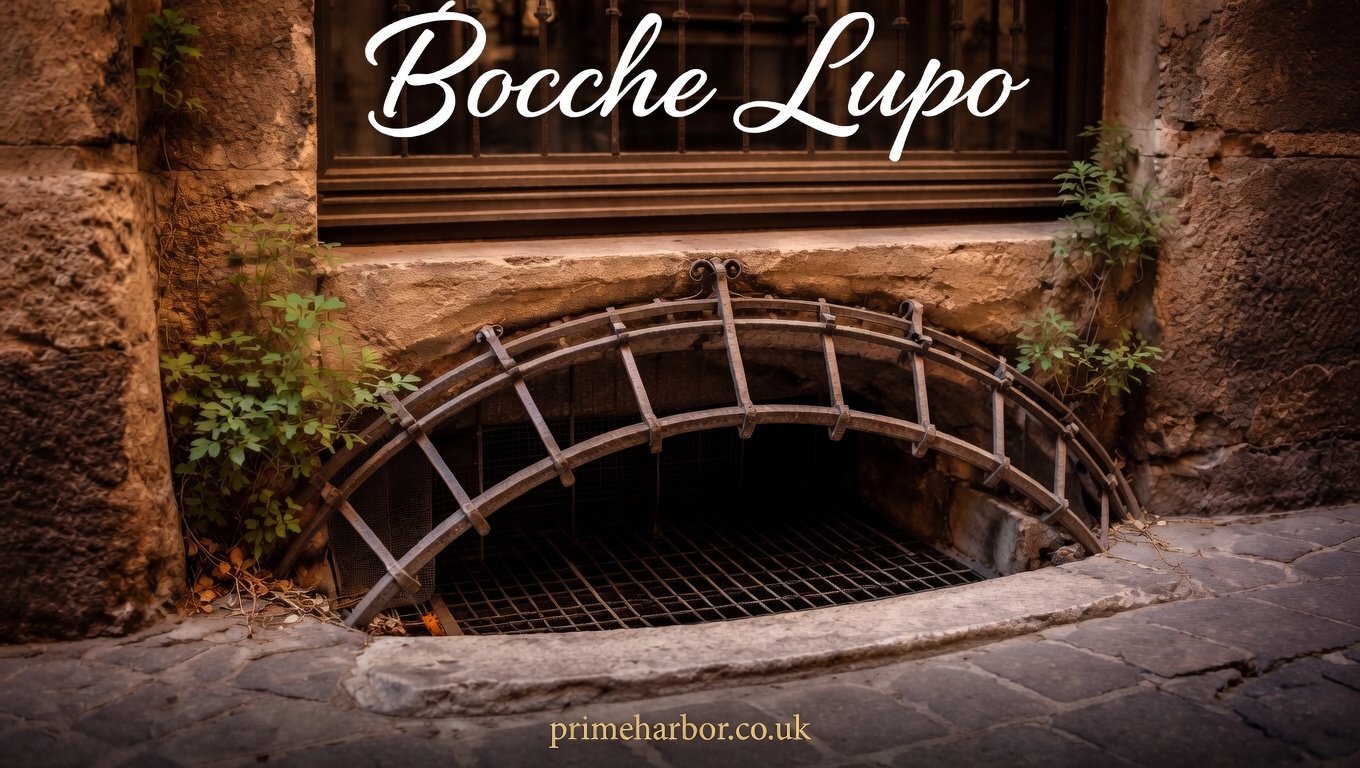
Walk through historic districts in Rome, Florence, or smaller hill towns and you’ll see bocche lupo everywhere once you know where to look. These are the low, grated openings cut into building foundations or sidewalks.
Their job is practical: they pull fresh air into damp basements and allow stale air to escape, preventing mold and structural rot in an era before mechanical systems. Many feature iron grates shaped like teeth or jagged edges, reinforcing the wolf-mouth resemblance.
Builders chose the design deliberately because the angled openings channeled wind efficiently while keeping out rain and rodents. In older palaces the bocche lupo also admitted slivers of daylight, turning dark storage rooms into usable spaces without weakening load-bearing walls.
Restoration experts still rely on these original vents during modern upgrades, proving the system’s lasting intelligence. When you notice bocche lupo on your next stroll, you’re seeing centuries of climate-smart engineering that kept buildings standing through floods, heat waves, and time itself.
How Bocche Lupo Ventilation Transforms Everyday Spaces
The real genius of bocche lupo lies in its simplicity. Each opening acts like a natural lung for the structure above. Air flows downward during cool evenings and rises as the day warms, creating a passive cycle that needs zero energy.
Homeowners in restored farmhouses often keep original bocche lupo intact because they outperform modern add-ons in humidity control. Designers today borrow the principle for contemporary cellars and underground parking, adapting the wolf-mouth shape with sleek metal or stone surrounds.
The aesthetic bonus is undeniable — those small dark recesses add texture and depth to otherwise plain facades. Travelers who take time to photograph bocche lupo discover patterns unique to each region: tighter grates in the north, more ornate frames in the south.
This attention to detail turns a functional element into a signature of Italian craftsmanship.
The Culinary Tradition of Bocche Lupo Pastries
Bocche lupo takes on a much gentler form in the kitchen. Soft, cream-filled pastries known by the same name delight bakers and sweet-lovers across central Italy. The dough is rolled thin, shaped into small pockets that resemble open mouths, then filled with rich pastry cream or chocolate.
A light dusting of powdered sugar finishes the look, making each bite feel like a playful nod to the original metaphor. Bakers insist the shape helps the filling stay put during baking while allowing steam to escape. Families pass down recipes that vary slightly by town — some add citrus zest, others incorporate local honey.
These treats appear at festivals and family gatherings, turning a once-fierce image into something comforting and shared. Tasting bocche lupo pastries connects you directly to centuries of resourceful Italian cooking that wastes nothing and celebrates simple ingredients.
Bocche Lupo in Language and Everyday Superstition
No discussion of bocche lupo feels complete without its close cousin, the famous theater blessing “in bocca al lupo.” Actors, singers, and performers hear it before stepping onstage, a deliberate invitation into danger that tradition says wards off real misfortune.
The proper reply — “crepi il lupo” — turns the threat back on the wolf itself. The exchange works because it acknowledges fear without surrendering to it. You’ll hear the phrase in opera houses, comedy clubs, and even casual conversations before big meetings or exams.
It shows how bocche lupo moved from physical traps and vents into the realm of courage and community. The ritual reinforces a distinctly Italian outlook: face the wolf, and you just might come out stronger.
Modern Bocche Lupo: Wineries, Restaurants, and Lasting Legacy
Today the name bocche lupo graces some of Italy’s most respected establishments. In Puglia, the Tenuta Bocca di Lupo estate produces elegant wines from ancient soils, where the “wolf mouth” name evokes both the region’s rugged beauty and the careful balance winemakers strike between tradition and innovation.
In London’s Soho, a celebrated Italian restaurant borrows the phrase to signal bold, regional cooking that feels adventurous yet welcoming. These modern uses keep the spirit alive, reminding diners and drinkers that every great experience carries a hint of risk and reward.
Even fishing enthusiasts know bocche lupo as sturdy modular tackle boxes, their interlocking design echoing the gripping power of the original metaphor. Across contexts, bocche lupo continues to adapt without losing its edge.
Symbolism That Still Speaks to Us
At heart, bocche lupo represents thresholds. They are places where the hidden meets the visible, where danger can become opportunity. The wolf mouth teaches resilience: what looks threatening often protects what lies inside.
In an age of climate challenges and rapid urban change, the passive cooling and ventilation of bocche lupo offer sustainable lessons architects still study. Culturally, the phrase encourages us to step into uncertainty with eyes open.
Whether you’re restoring an old building, planning a menu, or simply wishing a friend success, bocche lupo provides a powerful mental shortcut. It reminds us that every opening — literal or figurative — holds potential if we approach it with respect and creativity.
Why Bocche Lupo Matters More Than Ever
In our fast-moving world, bocche lupo stands as a quiet champion of thoughtful design and deep-rooted tradition. It proves that solutions from centuries ago can still outperform high-tech alternatives when properly understood.
Exploring bocche lupo on your travels turns ordinary sidewalks into history lessons and ordinary meals into cultural connections. The next time you spot those familiar grates or hear the theater blessing, you’ll recognize the full story behind them.
Bocche lupo invites curiosity, rewards attention, and rewards those who look closer. It transforms the everyday into something memorable, proving that even the smallest openings can carry enormous meaning.
Bocche lupo has traveled from ancient battlefields to modern tables without losing its power to fascinate. Its many forms — defensive, architectural, culinary, and linguistic — show how one vivid image can serve countless purposes.
Next time you find yourself in Italy, take a moment to seek out bocche lupo in all its guises. You’ll walk away with a richer understanding of the country’s ingenuity, its respect for nature, and its talent for turning potential threats into sources of strength and joy. The wolf mouths are still out there, waiting to tell their stories to anyone willing to listen.