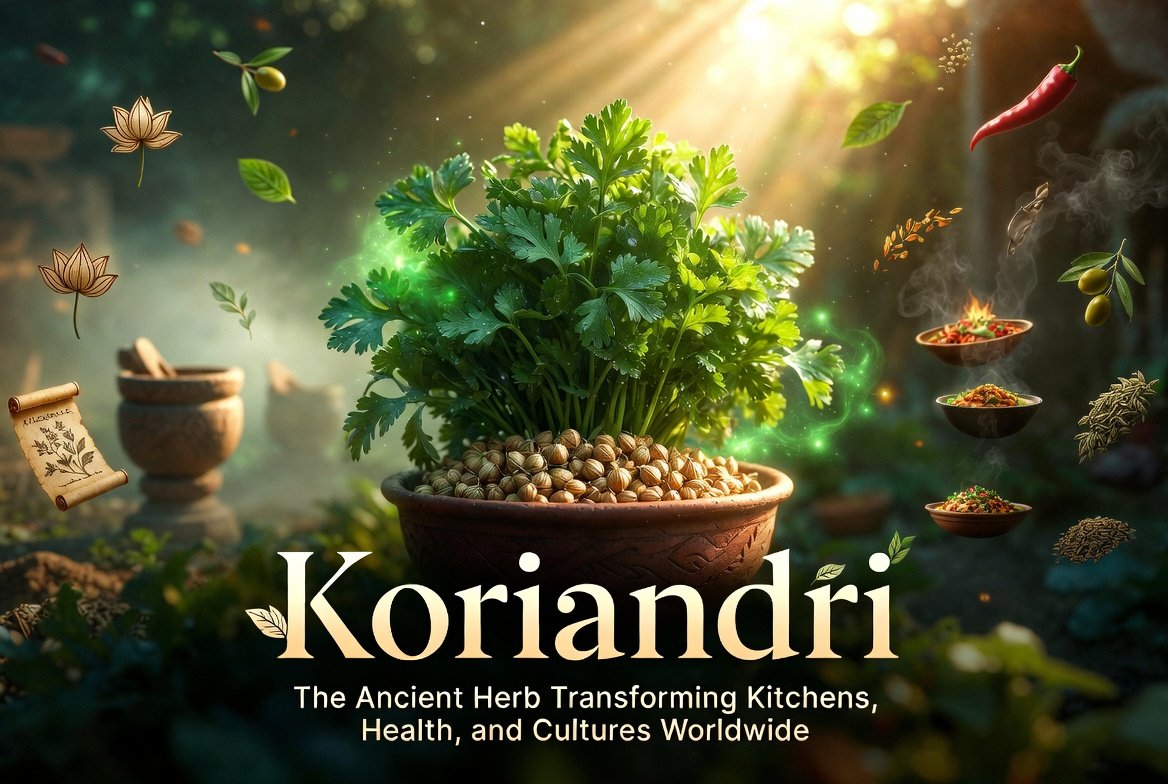
Koriandri first appears in kitchens and medicine cabinets as a quiet powerhouse, delivering bright flavors and proven wellness support in one unassuming plant. This annual herb, known scientifically as Coriandrum sativum, bridges continents and centuries with its dual personality — fresh leaves that pop with citrus notes and dried seeds that warm dishes with nutty depth. Far from a simple garnish, koriandri earns its place as a staple that elevates everyday meals while quietly boosting nutrition and tradition.
Origins and Rich History of Koriandri
Koriandri traces its roots to the Mediterranean Basin and North Africa, where wild forms still grow in rocky soils and open fields. Archaeological finds place its use back more than 8,000 years, with seeds recovered from ancient caves in Israel and dried fruits tucked into Egyptian tombs, including Tutankhamun’s. Early civilizations valued it not just for taste but for preservation — Romans mixed the seeds into meats and breads to extend shelf life, while Greek texts from the second millennium BCE reference its role in perfumes and remedies.
Trade routes carried koriandri eastward to India and China, where it wove into local spice systems, and westward as empires expanded. In ancient Israel, biblical references compared manna’s appearance to koriandri seeds, highlighting its everyday familiarity. By the time it reached the Americas through European explorers, cooks had already adapted its leaves and seeds to new climates and ingredients. This global journey explains why koriandri feels native everywhere yet carries a distinct old-world pedigree that modern chefs still respect. Its resilience in varied soils and quick growth cycle made it a reliable crop for farmers long before industrial agriculture, ensuring steady supply across seasons.
Botanical Basics That Set Koriandri Apart
At its core, koriandri belongs to the Apiaceae family alongside carrots, parsley, and celery. The plant grows swiftly to about 50 centimeters tall, producing broad, lobed leaves near the base that shift to feathery, lace-like foliage higher up. Small white or pale pink flowers cluster in umbrella-shaped umbels, eventually forming round, dry fruits that split into two seeds. These seeds hold the essential oils responsible for its signature aroma, dominated by linalool and pinene compounds that deliver citrus and warmth without overwhelming heat.
The leaves, often called cilantro in North America, offer a vibrant, slightly peppery bite best enjoyed raw or added at the final moment of cooking. Seeds, by contrast, mellow into a toasted nuttiness when gently warmed in a dry pan. This split personality lets koriandri serve two roles in one garden bed — harvest early for foliage, or let it bolt for spice. Soil preference leans toward well-drained, neutral pH around 6.2 to 6.8, and the plant thrives with consistent moisture but hates waterlogged roots. Such straightforward needs make koriandri forgiving for beginners while rewarding experienced growers who experiment with microclimates.
Leaves Versus Seeds – Mastering the Dual Flavors of Koriandri
Understanding the difference between koriandri’s fresh leaves and dried seeds unlocks endless creative possibilities. Leaves bring immediate brightness and a clean, citrus edge that cuts through richness in salsas, chutneys, or yogurt-based dips. They shine in Mexican guacamole, Indian street chaat, or Vietnamese pho, where a handful scattered at serving time keeps the flavor alive. Heat destroys their volatile oils quickly, so timing matters — add them last or use them as garnish to preserve that signature zing.
Seeds deliver a deeper, warmer profile once toasted. Whole or ground, they anchor spice blends like Indian garam masala, Ethiopian berbere, or European pickling brines. In curries, they thicken sauces naturally while infusing subtle lemon notes. Roasting heightens their nuttiness, perfect for rubs on grilled meats, roasted vegetables, or even baked goods where they balance sweetness. Some recipes call for both parts together: crushed seeds in the base and chopped leaves on top create layered complexity that single-ingredient dishes rarely achieve. This versatility explains why koriandri appears in everything from delicate cocktails to hearty stews without ever feeling repetitive.
Culinary Adventures with Koriandri Across Continents
Koriandri adapts effortlessly to regional palates, proving its worth in high-end restaurants and home kitchens alike. In South Asia, fresh leaves crown dal and biryani while seeds form the backbone of everyday masalas. Latin American cooks blend them into pico de gallo or green sauces for tacos, letting the herb’s freshness counter spicy chilies. Middle Eastern tables feature koriandri in falafel mixes and tabbouleh, where it brightens bulgur and herbs. Thai and Vietnamese kitchens rely on it in curry pastes and broths, often pairing the roots — deeper in flavor than leaves — for extra intensity.
European traditions incorporate toasted seeds into rye breads, sausages, and even gin botanicals. Chefs experiment further by infusing oils, creating pestos that swap basil for koriandri leaves, or stirring chopped herbs into grain salads with feta and pomegranate. The herb pairs naturally with cumin, garlic, lime, and chili, amplifying proteins from chicken to lentils and vegetables from cauliflower to carrots. Home cooks gain confidence once they realize koriandri forgives small mistakes — too much leaf adds freshness rather than bitterness, and extra seeds simply deepen warmth. Seasonal twists keep it exciting: summer salads with raw leaves, winter braises with ground spice.
Growing Your Own Koriandri – Simple Steps for Fresh Supply
One of koriandri’s biggest appeals lies in how easily it grows at home, delivering superior flavor compared to store-bought bunches. Start with quality seeds in full sun or light afternoon shade to prevent premature bolting in hot weather. Sow directly in well-draining soil or pots, spacing seeds a few inches apart and covering lightly. Keep the surface moist until germination, which usually happens within seven to ten days.
Harvest leaves once plants reach six inches by snipping outer stems, encouraging bushier growth. For seeds, allow flowers to set and turn brown, then hang stalks upside down in a paper bag to catch the dried fruits. Watch for aphids or powdery mildew by ensuring good air flow and avoiding overhead watering. Companion planting with dill or carrots can deter pests naturally. Even apartment dwellers succeed with window boxes, enjoying continuous harvests that cut grocery costs and guarantee peak freshness. This self-sufficiency turns koriandri from occasional ingredient into daily staple.
Health and Wellness Benefits Rooted in Koriandri
Beyond taste, koriandri packs impressive nutritional punch. Raw leaves supply generous doses of vitamins A, C, and K, supporting vision, immunity, and bone health while delivering antioxidants like quercetin and terpinene that combat inflammation. Seeds contribute fiber, iron, magnesium, and manganese, aiding digestion and energy levels. Traditional systems have long used koriandri to soothe bloating, ease gas, and promote regular bowel function through gentle enzyme stimulation.
Modern interest highlights its potential for heart health — compounds may help balance cholesterol and support healthy blood pressure via mild diuretic effects. Anti-bacterial properties in the essential oil show promise against common food-borne microbes, making it a practical kitchen ally. Whether stirred into morning smoothies, brewed as tea from crushed seeds, or simply scattered generously over meals, koriandri adds functional benefits without extra effort. Those sensitive to its aldehydes might notice a soapy note, but genetic variations explain this rather than any flaw in the plant itself. For most, the refreshing profile outweighs any personal perception differences.
Cultural Significance and Surprising Facts About Koriandri
Koriandri carries symbolic weight in many societies. Ancient Egyptians linked it to eternal love and placed it in burial chambers. Indian temples still offer it during rituals as a sign of purity and prosperity. In folklore across Europe and Asia, seeds flavored love potions or protective amulets. Its presence in early Coca-Cola formulas and classic gin recipes underscores industrial-era importance.
A fascinating quirk involves the soapy taste some experience due to specific olfactory receptor genes. Studies with twins confirm strong heritability, yet cultural exposure often shifts preferences — regions where koriandri appears daily report far lower dislike rates. This genetic lens reminds us that flavor perception is deeply personal, encouraging patience when introducing the herb to new eaters. Its low calorie density and high nutrient return also make it ideal for wellness-focused diets seeking maximum impact with minimal volume.
Overcoming Common Challenges When Working with Koriandri
Even seasoned cooks face occasional hurdles with koriandri. Leaves wilt quickly after harvest, but storing stems in a jar of water inside the fridge extends usability for days. Drying leaves loses most aroma, so freezing chopped portions in ice-cube trays with oil preserves them better for cooked dishes. Seeds benefit from toasting just before use to release full fragrance without scorching.
Bolting in hot weather frustrates gardeners, yet succession planting every two weeks maintains supply. For those who find the leaf flavor polarizing, starting with small amounts in familiar recipes gradually builds appreciation. Allergy concerns within the Apiaceae family remain rare but worth noting for sensitive individuals. These practical solutions ensure koriandri stays approachable rather than intimidating, turning potential frustrations into opportunities for refined technique.
In the end, koriandri stands as more than an ingredient — it represents connection across time and place. Its straightforward growth, layered flavors, and quiet health contributions make it indispensable for anyone serious about cooking or wellness. Whether sprinkled fresh over a weeknight stir-fry or simmered as seeds in a slow-cooked stew, koriandri rewards curiosity and consistency alike. Embracing this ancient herb invites richer meals, stronger traditions, and a deeper appreciation for nature’s quiet efficiency. As kitchens evolve toward fresher, more intentional ingredients, koriandri remains a steady guide, proving that the simplest plants often deliver the most profound impact.