Have you ever stopped and wondered what time was it 6 hours ago because a timestamp, a memory, or a deadline suddenly needed checking? That exact question pops up constantly in daily life, and knowing how to answer it quickly keeps everything on track.
Why Knowing What Time Was It 6 Hours Ago Matters in Real Life
Six hours covers half a workday, a full night’s sleep for many people, or the gap between major meals and meetings. When you figure out what time was it 6 hours ago, you reconstruct events accurately without guesswork. Nurses track medication windows, delivery drivers match pickup logs, and parents monitor fever patterns. Even casual users rely on it during travel or shift work.
The calculation seems basic, yet it powers serious decisions. One wrong hour can delay reports, confuse schedules, or create safety gaps in transport and healthcare. Mastering what time was it 6 hours ago turns a simple subtraction into a practical superpower that saves time and reduces stress.
Manual Step-by-Step Method to Calculate What Time Was It 6 Hours Ago
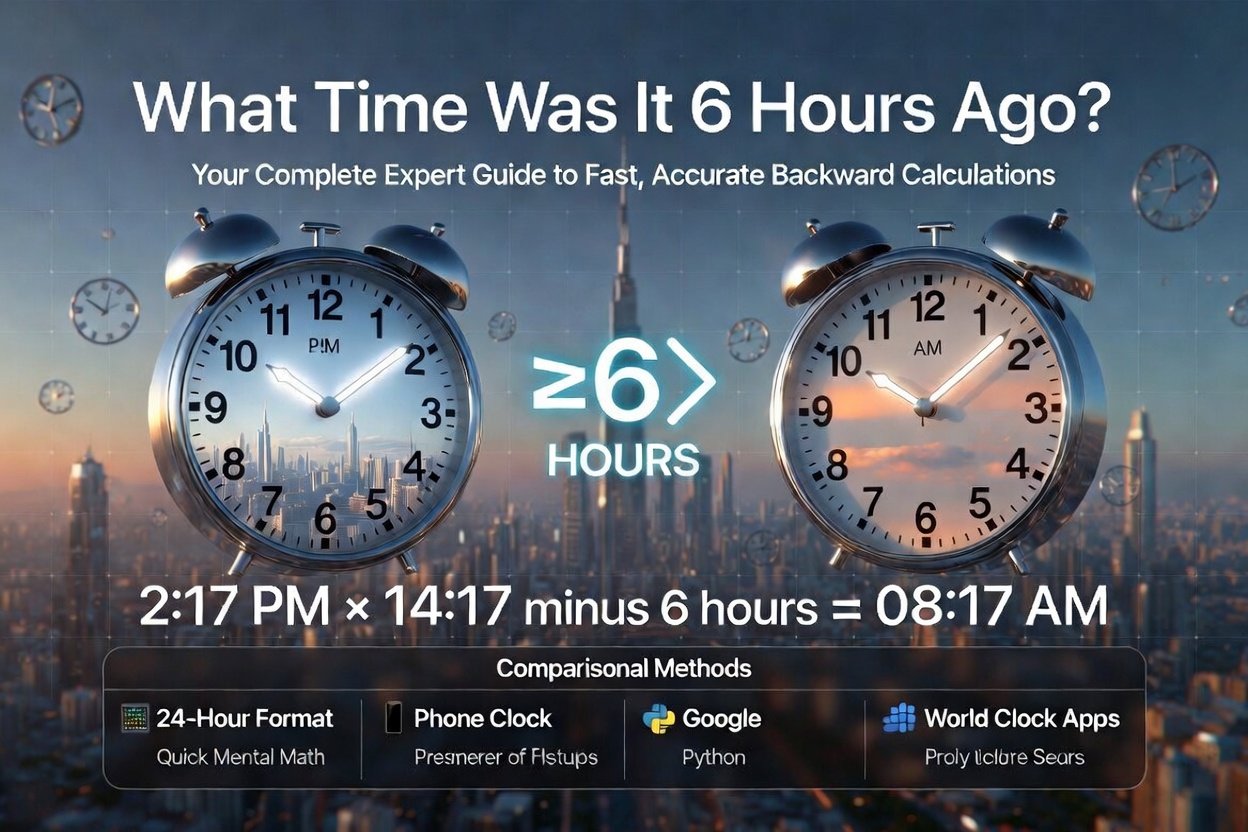
Begin with your current local time. Subtract six from the hour first, then adjust minutes. If the current time is 2:11 PM, what time was it 6 hours ago becomes 8:11 AM the same day. Straightforward when the result stays positive.
Cross midnight or noon and things change. At 3:45 AM, subtracting six hours lands at 9:45 PM the previous evening. Always check the date shift. Switch to 24-hour format for clarity — 14:11 becomes 08:11 instantly. No AM/PM flip needed.
Try these examples to build speed. If your clock shows 11:30 PM, what time was it 6 hours ago equals 5:30 PM. At 12:05 AM, it rolls back to 6:05 PM yesterday. Write the steps once or twice and the process becomes automatic. This manual skill works anywhere, even offline or during power cuts.
Handling Edge Cases When You Ask What Time Was It 6 Hours Ago
Negative minutes create the biggest confusion. Current time of 10:20 AM minus six hours means borrowing an hour: first drop to 9:20 AM then subtract the full hour, landing at 4:20 AM. Always borrow before subtracting minutes.
Daylight saving time adds another twist. When clocks spring forward or fall back, the six-hour gap shifts by an extra hour in affected regions. Confirm your local offset first. In places like Karachi on Pakistan Standard Time (UTC+5), what time was it 6 hours ago often crosses into the previous UTC day entirely.
Military and 24-hour formats eliminate AM/PM errors completely. Use them during international calls or log reviews. These small adjustments keep your backward calculations rock-solid no matter the situation.
Real-World Uses Where What Time Was It 6 Hours Ago Makes a Difference
Delivery teams verify package scans by asking what time was it 6 hours ago to match warehouse records. Customer service agents trace complaint timelines the same way. In childcare, parents calculate what time was it 6 hours ago when symptoms start to give doctors precise windows.
Travelers fighting jet lag reset body clocks by figuring out what time was it 6 hours ago in their home zone. Photographers match lighting conditions from earlier shots. Athletes review training logs and recovery data using the same backward step. Even hobby cooks check marination times or oven cycles with this quick method.
Shift workers in hospitals, factories, or call centers rely on it daily. One accurate answer to what time was it 6 hours ago prevents overtime disputes and keeps teams coordinated across cities.
How Time Zones and Daylight Saving Affect What Time Was It 6 Hours Ago
Local clocks vary by hours or half-hours worldwide. Subtract six hours in one zone and you might land in a completely different day elsewhere. International teams face this constantly. A call ending at 5 PM in New York requires knowing what time was it 6 hours ago in your zone to align notes properly.
Daylight saving changes move the goalposts twice a year in many countries. Always double-check the current offset before subtracting. Mobile devices handle most conversions automatically, yet manual verification still matters during flights or outages. Once you factor in zones, what time was it 6 hours ago becomes a dependable tool instead of a source of confusion.
Common Pitfalls When Calculating What Time Was It 6 Hours Ago and How to Fix Them
Forgetting minutes is the top error. A time like 2:47 PM requires subtracting both hours and minutes, or borrowing when minutes go negative. People also skip the day rollover, staying on the same date out of habit when midnight has passed.
Mixing 12-hour and 24-hour clocks creates opposite-day mistakes. Relying only on memory during rushed moments leads to quick slips. The fix is simple: pause, jot the current time, subtract step by step, then verify with a second method. Ten seconds of care prevents bigger problems later.
Digital Helpers and Mental Shortcuts for Instant Answers to What Time Was It 6 Hours Ago
Voice assistants give hands-free results while driving or cooking. Calendar apps often highlight past timestamps automatically. Spreadsheet formulas let shift workers build monthly reports in seconds by entering current time once.
For pure mental speed, round the hour first, subtract six, then tweak minutes. Pair this with your device’s built-in clock history. Choose manual math for quick checks and digital tools for permanent records. The combination keeps you accurate without slowing down.
Building Stronger Time Awareness Through Backward Thinking
Practicing what time was it 6 hours ago sharpens forward planning too. It trains discipline around punctuality and accountability. Finance teams use similar logic for audit trails. Emergency responders calculate response windows by looking back at logs.
Kids learn the skill through simple games — ask them what time was it 6 hours ago when a movie started or snacks were served. The habit turns math into everyday adventure and prepares them for adult responsibilities. Over time, you answer the question faster and with total confidence.
Scaling the Skill Beyond Six Hours
Once six hours feels easy, double it for twelve-hour gaps or halve for three-hour checks. Add or subtract daylight factors only in scientific work. Music producers align multi-session tracks by knowing exact timestamps hours earlier. The same logic applies to project management, fitness tracking, or creative workflows.
Review your typical day and spot moments where what time was it 6 hours ago would have helped. Keep a quick reference card with common subtractions. Within weeks the entire process becomes second nature.
Final Thoughts on Mastering What Time Was It 6 Hours Ago
Time moves forward nonstop, but the ability to look back accurately keeps life organized. Combine manual skill, zone awareness, and smart tools. Next time the question arises, you’ll handle it smoothly instead of scrambling.
What time was it 6 hours ago connects modern convenience with the timeless need for order. Treat every hour with care, calculate it correctly, and watch your productivity and peace of mind rise. The clock keeps ticking, yet knowing how to glance backward keeps everything perfectly aligned.